Cobbled Ottoman bazaar, copper workshops, mosques, and turquoise Neretva views.
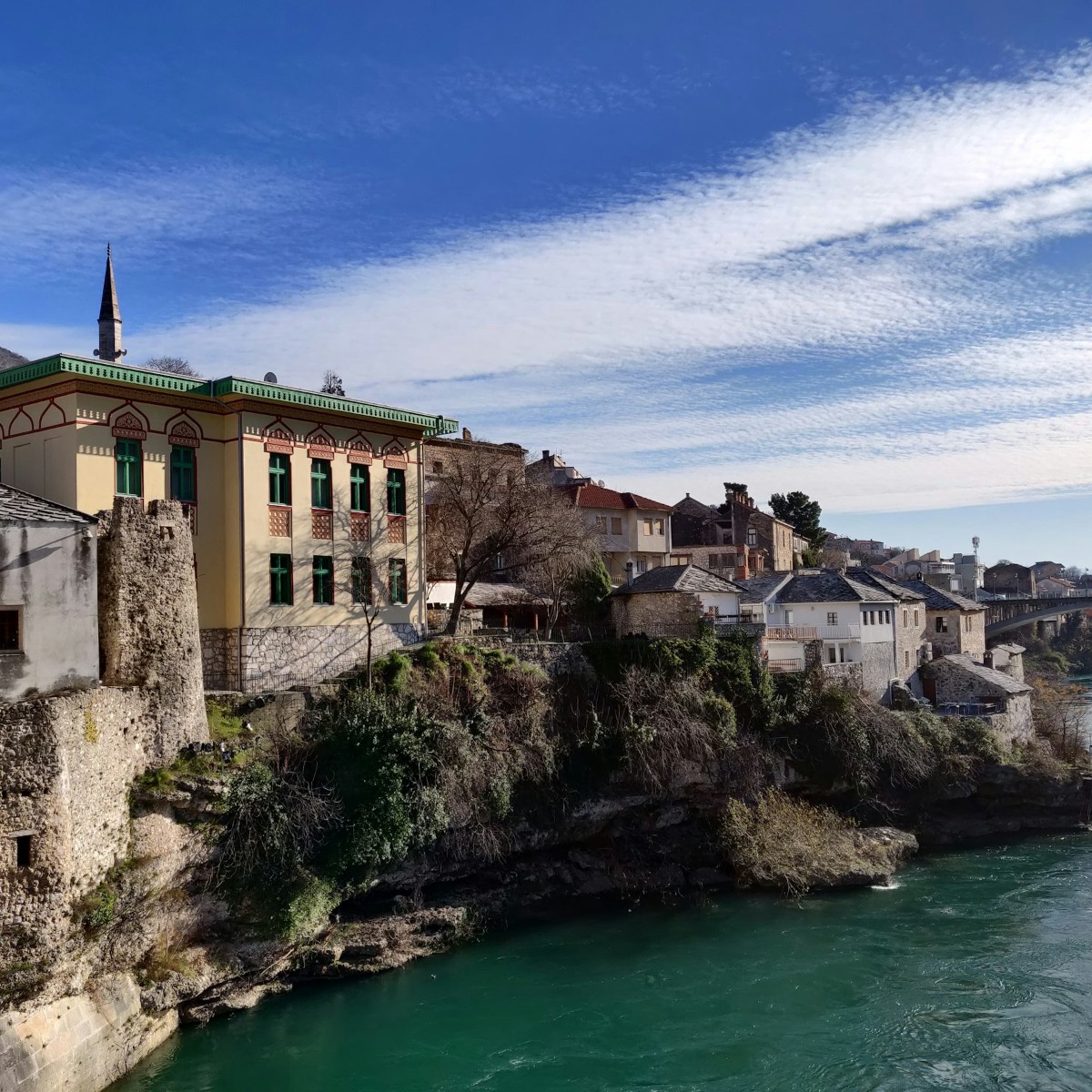
Mostar's old town is the compact Ottoman-era quarter on both banks of the Neretva, connected by the Stari Most bridge. The core spans roughly 400 metres end to end — walkable in 15 minutes, worth spending at least 90 minutes in. The entire old town, together with Stari Most itself, is UNESCO-listed since 2005.
Kujundžiluk is the east-bank bazaar — a narrow cobbled street of copper workshops, carpet sellers, jewellers, and souvenir shops that leads from the bridge toward the Ottoman minaret of the Koski Mehmed-paša mosque. The name means "coppersmith street" in Turkish, and several families here have worked copper for generations. You can watch the beating of copper coffee sets, trays, and decorative plates through open workshop doors. Prices for handmade pieces are moderate by European standards; machine-reproduced items are cheaper but less distinctive.
Koski Mehmed-paša Mosque (1617) is one of Mostar's finest Ottoman-era mosques — small, beautifully proportioned, and open to visitors daily. For a modest fee you can climb the narrow spiral staircase of the minaret for one of the best rooftop views of Stari Most. Women should cover shoulders and knees; head covering is provided at the door.
The west bank has a different character — less touristy, more residential, with the Crooked Bridge (Kriva Ćuprija, a small stone bridge that pre-dates Stari Most) and the Karađoz-beg mosque (1557) as its main landmarks. This side is where locals eat — the restaurants closer to the Neretva on the east bank skew toward coach-tour pricing; west-bank konobas are cheaper and better.
What to eat: ćevapi (grilled minced meat in flatbread), begova čorba (Bosnian chicken and vegetable soup), sogan-dolma (stuffed onions), and baklava for dessert. Traditional coffee is served in a djezva (copper pot) with a sugar cube and rahat lokum — expect it to take 20 minutes to enjoy properly. Alcohol is widely available; Sarajevsko pivo and Herzegovinian wines are the local choices.
Scars of 1992–95: the old town was heavily damaged during the siege of Mostar. Stari Most itself was destroyed in November 1993 and reopened in 2004 after painstaking reconstruction using original stones recovered from the riverbed. Several buildings near the bridge still show bullet holes — a deliberate choice by the owners to leave the damage visible.
For travellers on our tours: every cross-border tour (Dubrovnik, Split, Sarajevo) includes a 1.5- to 2.5-hour Mostar walking portion that covers Kujundžiluk, Stari Most, and the Koski Mehmed-paša mosque. The Mostar Full-Day tour uses the old town as the starting and ending point. Bridge divers (typically July through August, between 10:00 and 16:00) perform for tips — €25–35 is collected in a circle before each dive.
Practical notes: the old town is pedestrianised; cars park on the perimeter. Public toilets are available near the bridge (small fee). ATM machines are on the west bank. Crowds peak between 11:00 and 16:00 in July–August — early morning (before 10:00) or late afternoon (after 17:00) are the quietest times to walk.
Mostar Old Town is in Mostar. See our Mostar travel guide for more in the area.
Several Kravica tours include this stop — book directly and save.
Browse all tours
Five stops across Herzegovina in one day. Meet 09:45 at Food House Mostar, back by ~5:15 pm.
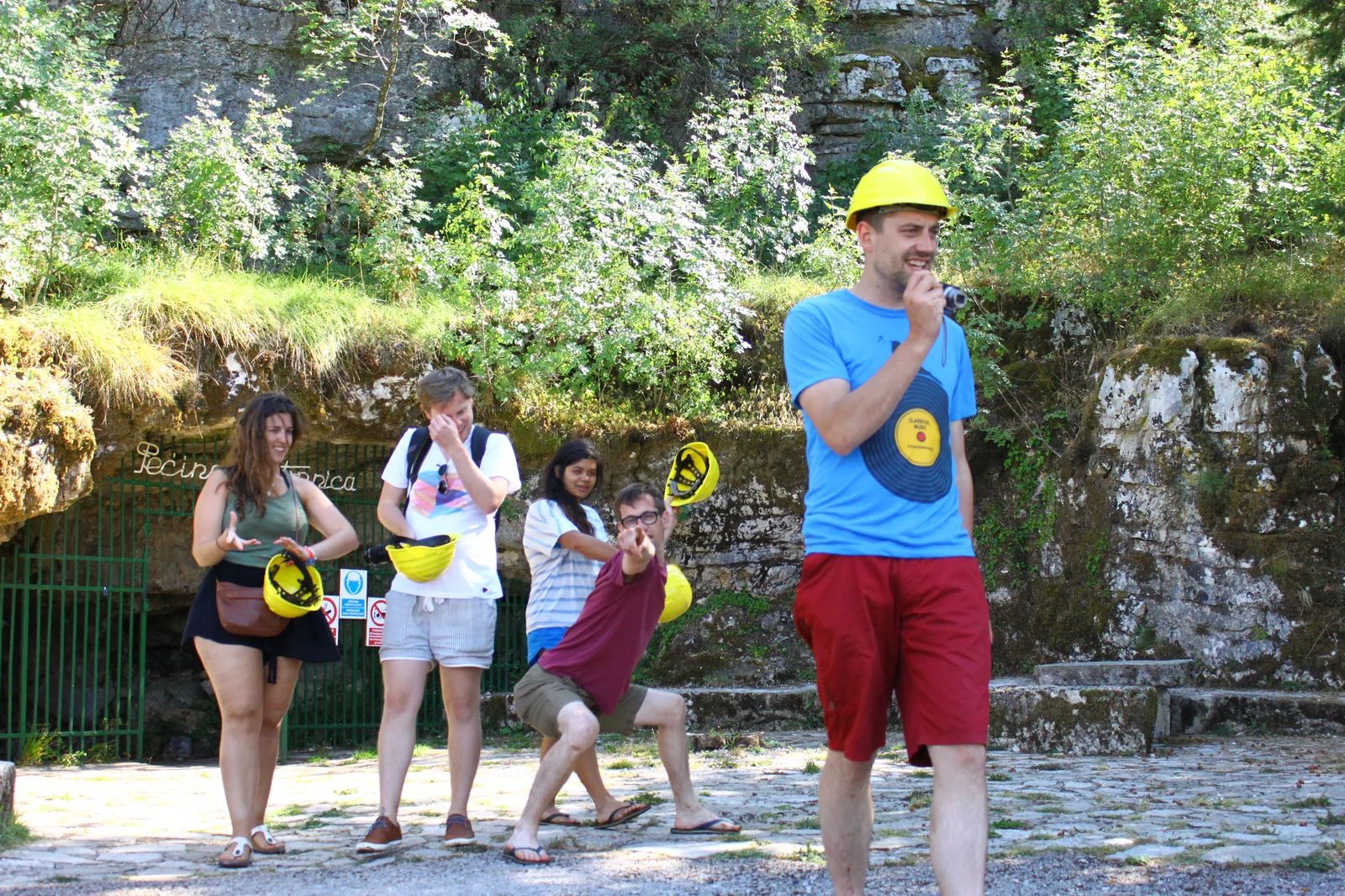
Cross into Bosnia for a full-day trip through Herzegovina. 07:00 pickup at Pile Gate, back by ~6 pm.
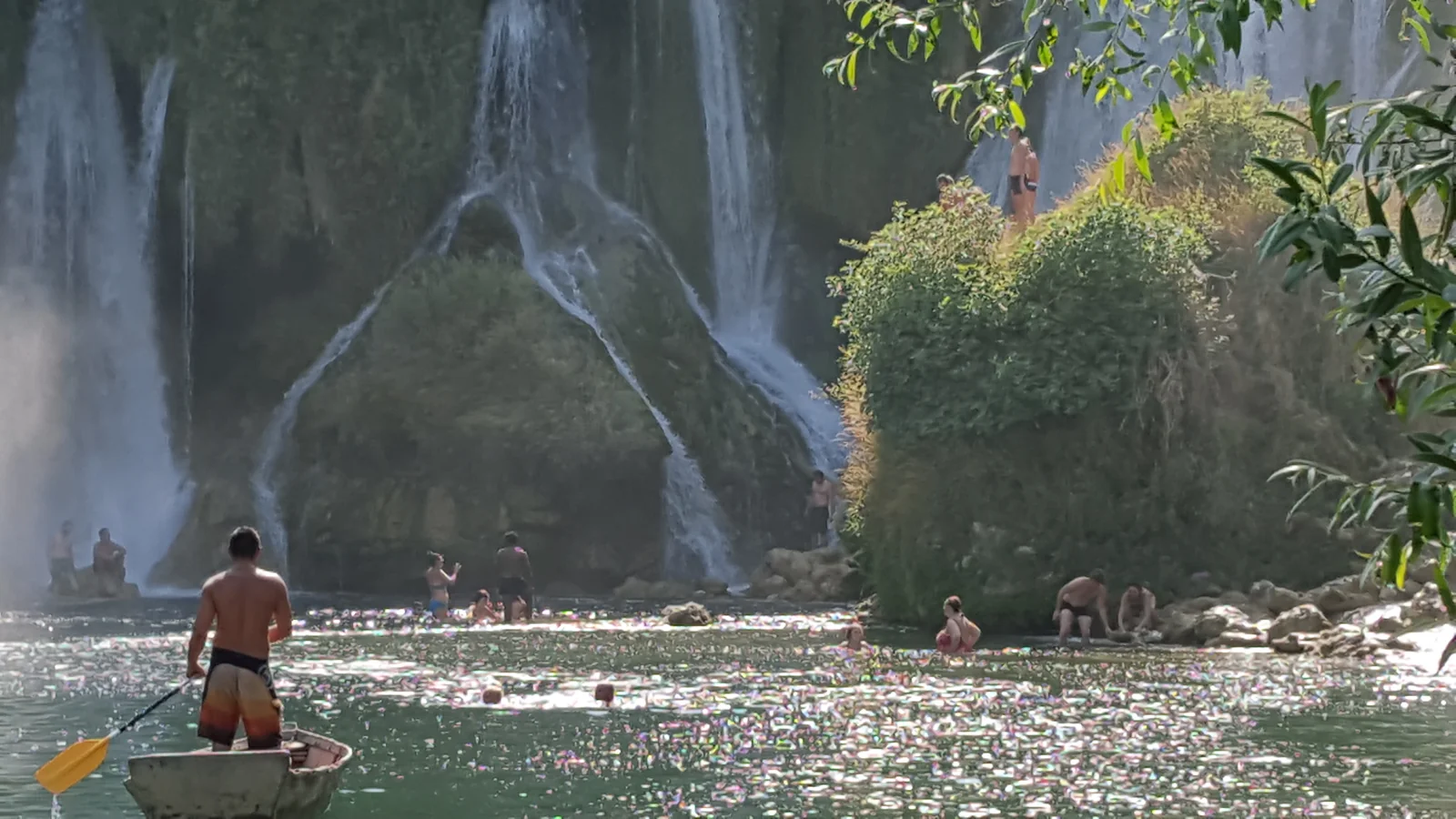
07:00 pickup at Split Riva, 2.5 hours in Mostar with the Stari Most UNESCO bridge, 2 hours swimming at Kravica.
12 hours of Herzegovina highlights in one day. 08:00 pickup at Gazi Husrevbegova 75 or your hotel.